
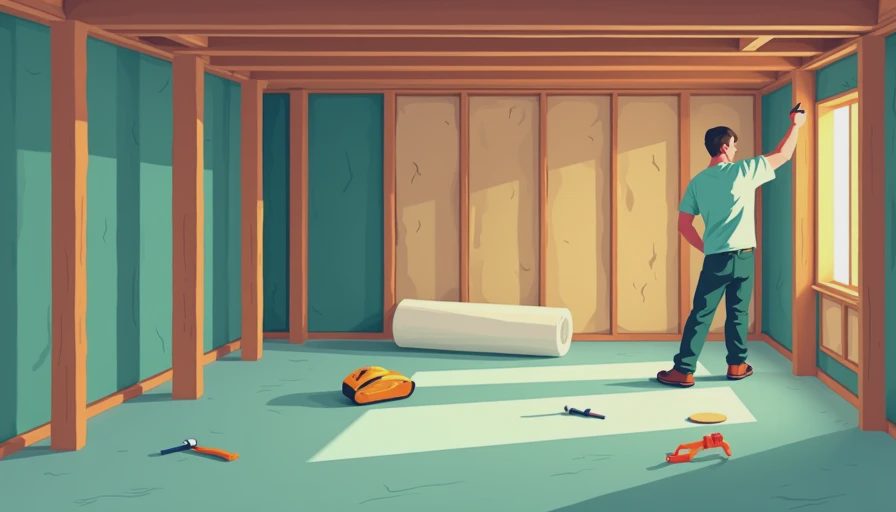
If you're finishing a basement or just trying to stop the cold floor above from freezing your toes, you've run into the big question: should you use **faced or unfaced insulation for basement ceiling**? I've seen homeowners get talked into the wrong product by contractors who don't explain the tradeoffs. This is where people get talked into the wrong job.
Before you buy anything, you need to understand the vapor barrier rule and how your basement's moisture situation changes the answer. Using the wrong faced or unfaced insulation for basement ceiling can lead to mold, sagging insulation, or a wasted weekend. Let me walk you through the differences so you don't throw money at the wrong roll.
What's the Difference Between Faced and Unfaced Insulation?
Faced insulation has a kraft paper or foil vapor retarder attached to one side. Unfaced is just the fiberglass or mineral wool with no paper layer. The kraft paper stops moisture from moving through the insulation, which matters when you're installing below a heated floor. Unfaced lets vapor pass through freely.
For a basement ceiling, the vapor barrier side of faced insulation should face the warm interior of the room above (usually the subfloor). That means the paper goes up against the floor joists, facing the heated space. If you put it facing down into the basement, you trap moisture in the insulation. That's a classic mistake.
Unfaced insulation is used when you don't want a vapor retarder – for example, in hot, humid climates where you want the ceiling to breathe, or when you're adding insulation over an existing layer that already has a vapor barrier.
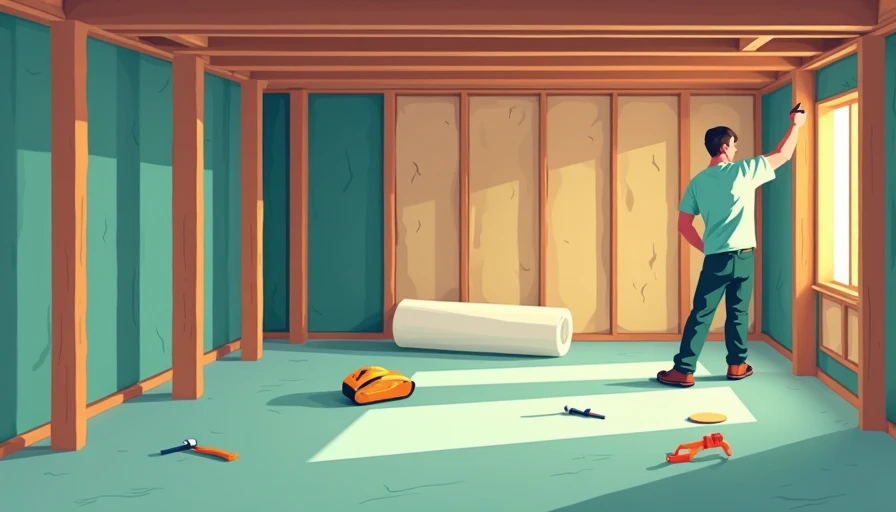
When Should You Use Faced Insulation for Your Basement Ceiling?
Most old homes in cold climates should use **faced or unfaced insulation for basement ceiling** depending on your region. In heating-dominated climates (like the Northeast or Midwest), faced insulation is usually the right call. The kraft paper acts as a vapor retarder that keeps moisture from the warm house above from condensing inside the cold basement joists.
I helped a friend insulate his 1920s rowhouse basement in Philadelphia last winter. We used faced R-19 fiberglass batts (Owens Corning, the pink stuff) and stapled the paper flanges to the bottom of the floor joists. It made an immediate difference in the first-floor temperature. His heating bill dropped about 15% over the next two months. That's the kind of real-world result you want.
But don't just grab faced insulation because it's the default. Check the vapor barrier rules for your climate zone. In mixed-humid climates (like the Mid-Atlantic) or hot-humid climates (like the Gulf Coast), faced insulation can trap moisture in the basement, leading to mold on the paper or the wood above. If your basement has high humidity – condensation on pipes, musty smell – you might need unfaced instead.
When Unfaced Insulation Makes More Sense
Unfaced insulation is simpler to install because there's no paper to staple – you just friction-fit the batts between the joists and use wire or twine to hold them up. It's also a bit cheaper (typically $0.10–$0.20 less per square foot). For a 500 sq ft basement ceiling, that could save $50–$100. Not huge, but real.
The bigger reason to choose unfaced is moisture management. If your basement is unconditioned and damp, unfaced insulation allows water vapor to move through the insulation rather than condensing on the vapor barrier. That's critical in basements with concrete walls that wick moisture. You don't want a vapor barrier that traps water against the wood joists. I've seen rot caused by that exact mistake.
Another common scenario: you're adding a second layer of insulation over an existing faced layer. Never sandwich a vapor barrier between two insulation layers – it creates a moisture trap. Use unfaced for the second layer.

Step-by-Step: Choosing the Right Insulation for Your Basement Ceiling
Here's a practical decision tree to pick the right **faced or unfaced insulation for basement ceiling**:
- **Check your climate zone.** In zones 5–7 (cold), faced is typically recommended. In zones 1–4 (hot-humid or mixed), unfaced may be better.
- **Test your basement humidity.** Use a hygrometer. If relative humidity is consistently above 60% in summer, lean toward unfaced.
- **Look at existing insulation.** If there's already a vapor barrier on the ceiling (e.g., old foil-faced batts), add unfaced on top.
- **Consider the floor above.** If the room above is heated and you have central HVAC, faced is generally fine. If it's an unheated garage or porch, unfaced may be better to avoid condensation.
- **Check local building codes.** Some municipalities require a specific vapor retarder class. Kraft paper is a Class II vapor retarder; foil is Class I (more restrictive). Unfaced is Class III. Code might dictate which you can use.
Common Mistakes to Avoid
I see the same mistake over and over: installing faced insulation with the paper facing down into the basement. If you do that, the warm, moist air from the room above hits the cold paper and condenses. The paper gets wet, the insulation sags, and eventually the joists rot. You are not buying the product alone. You are buying the install, the timing, and the follow-through.
Another mistake: using unfaced insulation in a cold climate without a separate vapor retarder. You'll get condensation inside the insulation, reducing its R-value and inviting mold. If you go unfaced, consider adding a vapor barrier paint (like a vapor retarder primer) on the ceiling drywall or a polyethylene sheet between the insulation and the floor above – but that's a different can of worms.
Final Recommendation: Faced or Unfaced Insulation for Basement Ceiling?
For most homeowners fixing up an old house in a heating-dominated climate, go with faced R-19 to R-30 fiberglass batts. Staple the paper flanges to the joist bottoms, paper side up toward the warm floor. If you live in a humid area or your basement is damp, use unfaced and then seal the ceiling with a vapor-retarding paint instead.
There’s a difference between cosmetic ugly and expensive ugly. Putting the wrong insulation in your basement ceiling is expensive ugly – it leads to mold, rot, and wasted money. Get it right the first time. Fix the house you have, not the fantasy version of it.
**Check your climate, check your humidity, and check the code before you buy. Your wallet – and your floorboards – will thank you.**