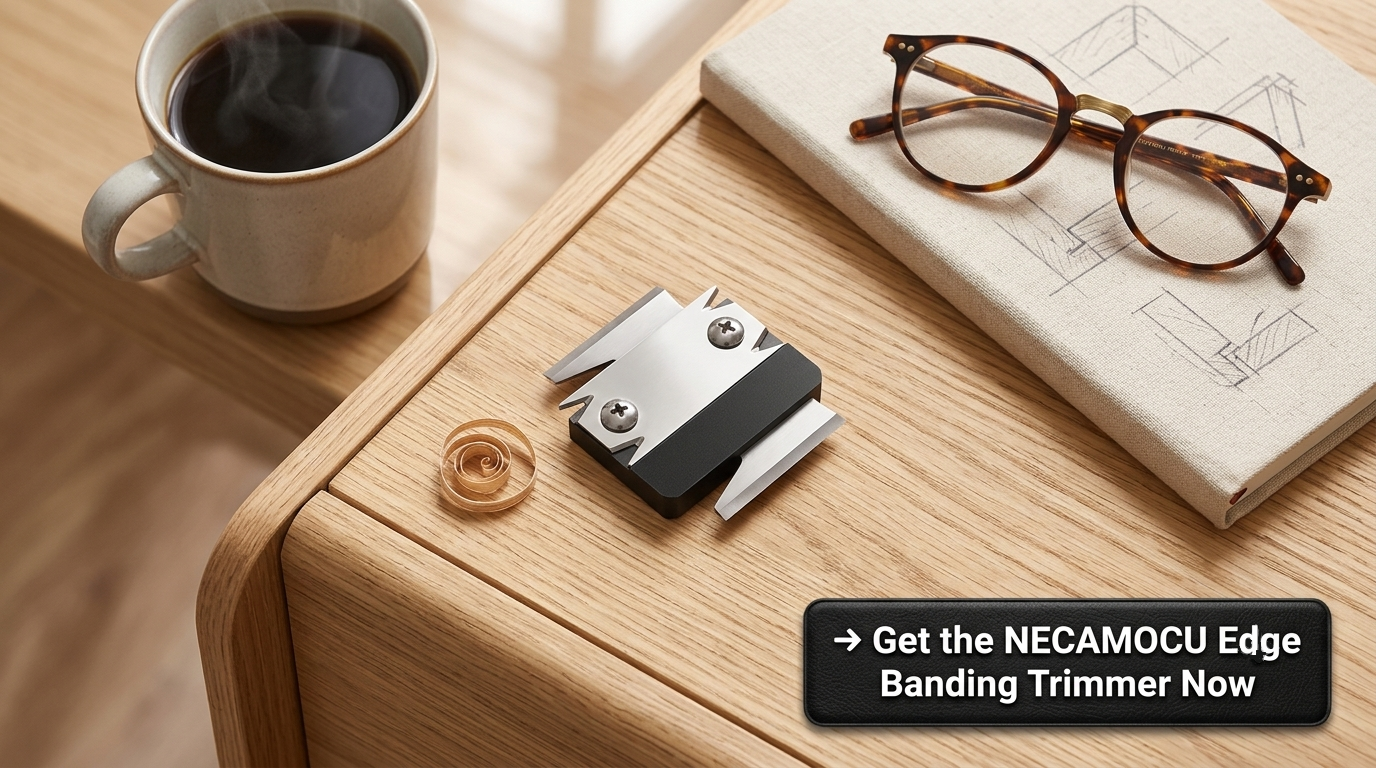
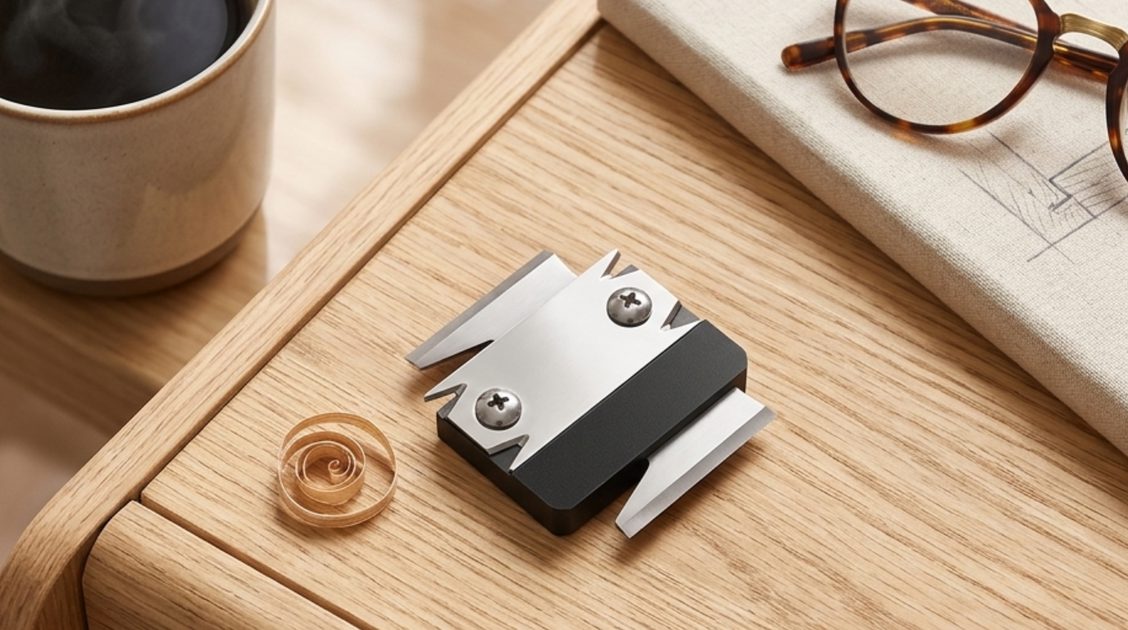
If you've ever stood in front of a 1970s kitchen cabinet with veneer peeling off the edge like old wallpaper, you already know the specific kind of frustration this post is about. I've spent the last few years slowly renovating a fixer-upper, and if there's one lesson that old homes teach you over and over, it's that the small repairs are often the ones that eat your entire Saturday.
Edge banding — that thin strip of veneer, PVC, or laminate glued to the raw edge of plywood — is one of those small repairs. Get it wrong, and it looks worse than the damage you were trying to fix. Get it right, and nobody will ever know that panel wasn't brand new.
This is the story of how a tiny, $7 tool called the NECAMOCU Edge Banding Trimmer ended up solving a problem I'd been fighting with a utility knife for months.
The Problem With Fixing Old Cabinets Yourself
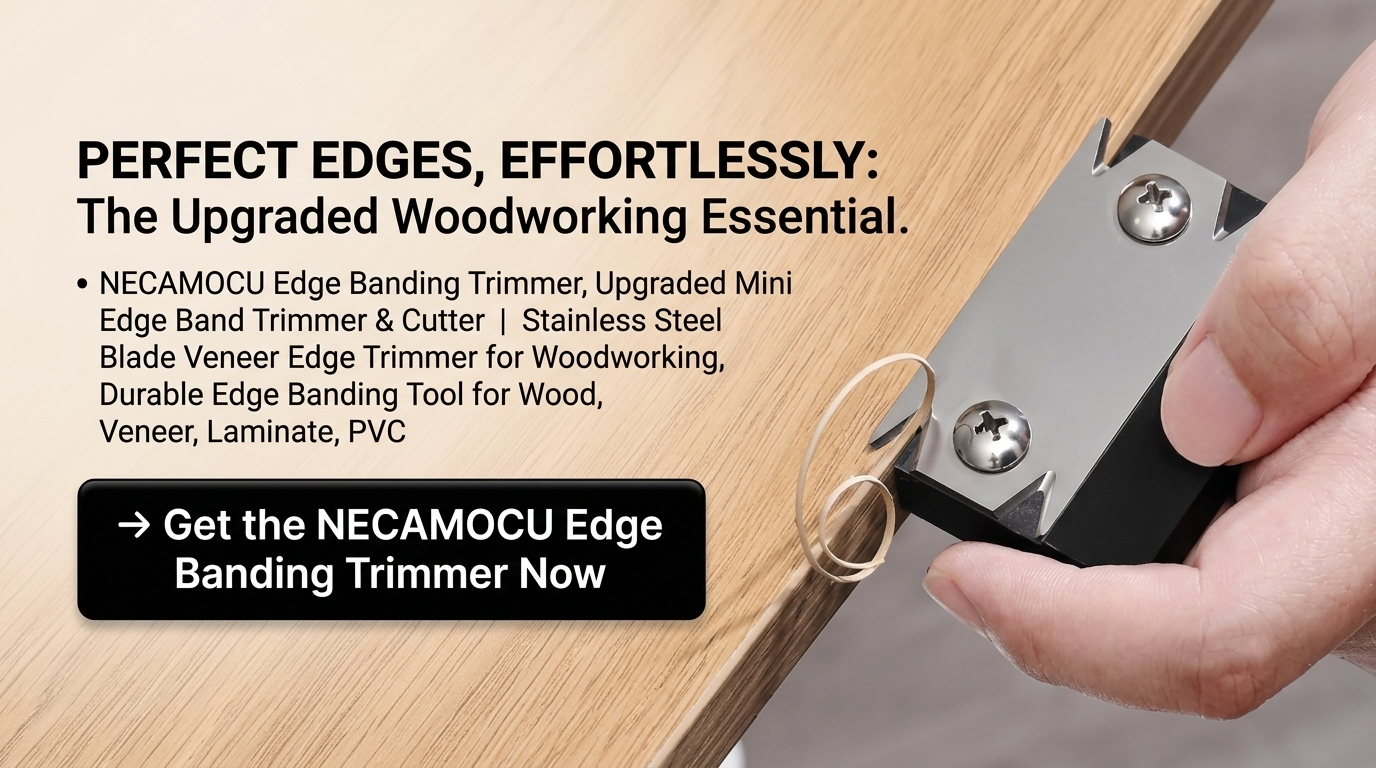
Old homes are full of edge banding that has either bubbled up, cracked, or been re-glued so many times it's uneven. When you replace that banding — or repair a shelf, drawer front, or built-in bookcase — you eventually iron on a new strip of veneer or PVC edging that's slightly wider than the panel. That overhang has to be trimmed flush.
Every single tutorial online tells you to "just use a sharp utility knife," and every single time I tried that, I ended up with one of three results: a gouge in the plywood underneath, a jagged trim line, or a strip that popped halfway off because I pressed too hard.
After the third ruined drawer front on my hallway built-ins, I went looking for an actual tool made for this job — not a workaround. That's how I landed on the NECAMOCU Edge Banding Trimmer.
What Exactly Is the NECAMOCU Edge Banding Trimmer?
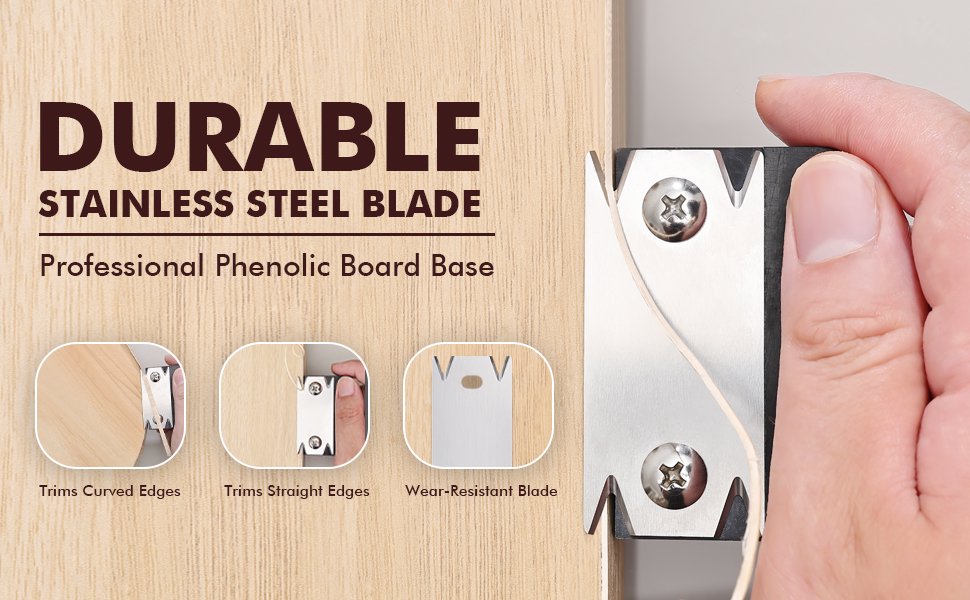
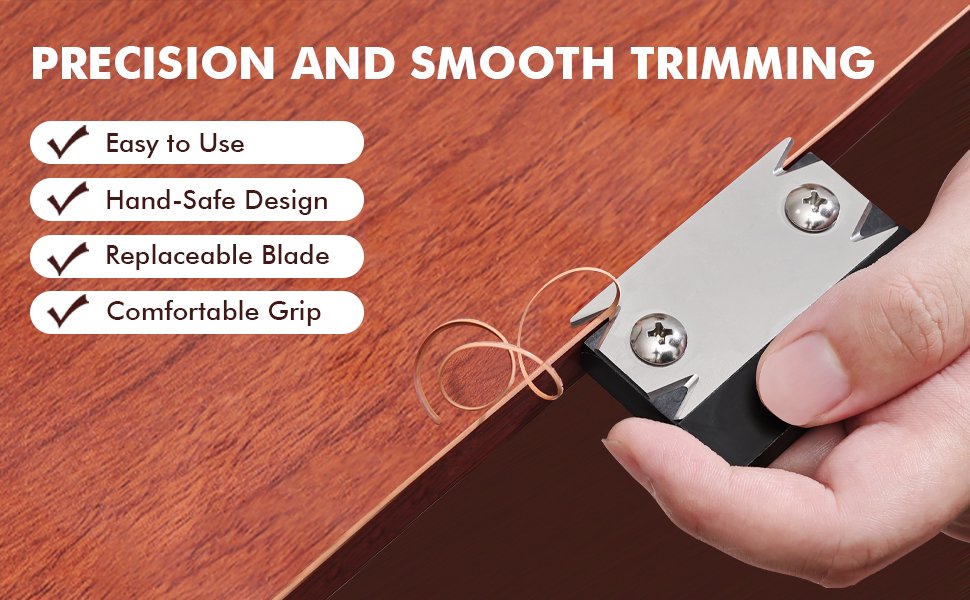
It's a small, handheld, no-assembly-required trimming tool designed specifically to shave excess edge banding flush with a panel's surface. No batteries, no cords, no learning curve. You clip it onto the overhanging edge, drag it along the strip, and the double-sided 420 stainless steel blade shears the excess material away in one clean pass.
Here's the spec rundown, pulled straight from the manufacturer's listing:
Feature | Detail |
|---|---|
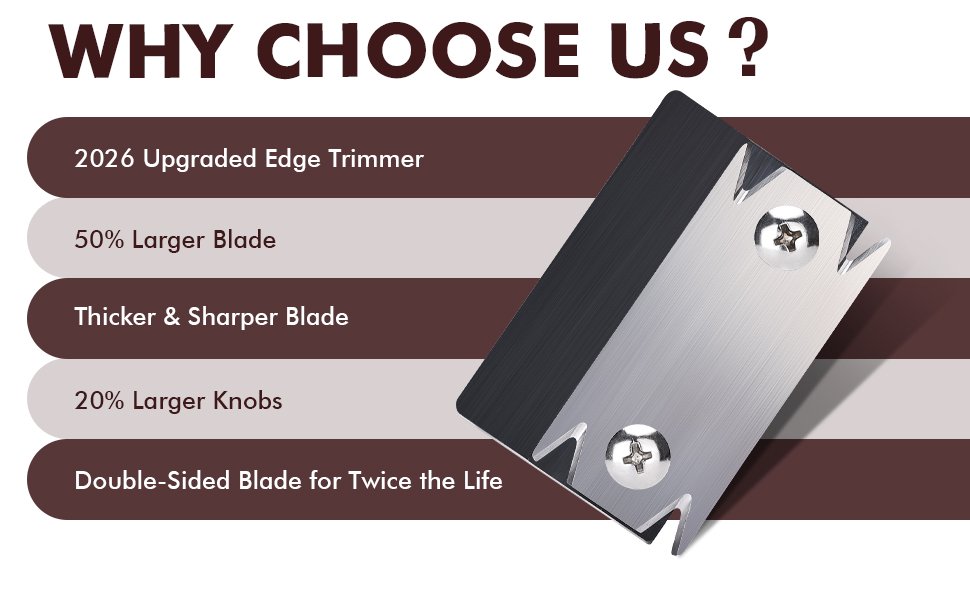
Blade material | 420 stainless steel, double-sided (2x lifespan) |
Base material | Phenolic board, non-slip grip |
Blade design | V-shaped for safety and control |
Weight | About 2 ounces |
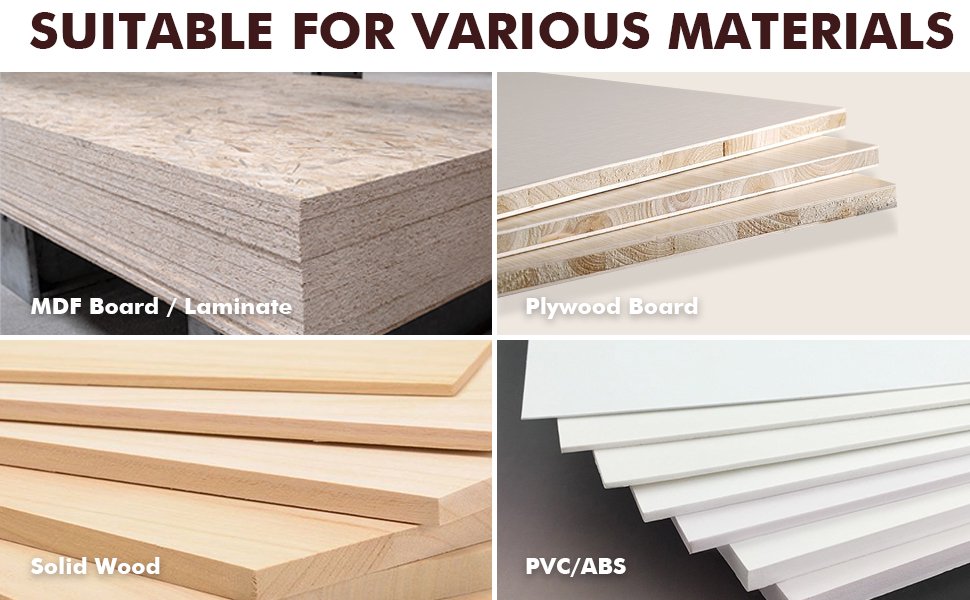
Works on | Wood, veneer, PVC, ABS, melamine, laminate, plywood |
Edge type | Straight and curved edges |
Warranty | Lifetime manufacturer warranty |
Assembly required | None — ready to use out of the box |
If you want the full spec sheet and current stock, you can check out the NECAMOCU Edge Banding Trimmer product page before reading on — but stick with me, because the "on paper" specs only tell half the story.
→ Get the NECAMOCU Edge Banding Trimmer Now
My Actual Experience Using It
I'll be honest — I didn't expect much from a tool this small. It's genuinely lighter than a phone charger, at around 2 ounces, and my first thought when I opened the package was "this is supposed to replace my utility knife?"
It did. Within the first three feet of trimming.
Straight Edges Were Almost Too Easy
I started with a straightforward drawer front — new PVC edging, slightly overhanging on both long sides. I clipped the V-shaped blade over the lip, applied light pressure, and pulled it down the length of the board. One pass. Flush. No chipping, no gouge marks in the substrate underneath. Compared to the utility knife method — where I was essentially eyeballing a blade angle and hoping for the best — this felt like cheating.
What actually saved me wasn't just the clean cut, it was the time. A job that used to take me twenty minutes of careful, tense slicing (plus touch-up sanding afterward) took under two minutes. My drawer fronts stopped looking like DIY projects and started looking like they'd been done at a cabinet shop.
Curved Edges: The Real Test
Old homes are rarely square. I have a rounded bullnose shelf edge in my laundry room that I was dreading tackling, because every edge trimmer I'd read about online seemed to struggle on anything that wasn't a straight line. This is where the V-shaped blade design actually earned its keep — the trimmer followed the curve without catching or skipping. It wasn't instant-perfect; I did a light second pass on one section where the veneer hadn't fully adhered, and that cleaned it right up. But there was zero chipping, and no visible tear-out on the curve, which is the part that usually ruins a curved-edge repair.
Working Across Different Materials
Over about three weekends, I ran this same trimmer across four different jobs:
PVC edging on a bathroom vanity drawer — clean, flush, no melting or dragging
Real wood veneer on the laundry room shelf — smooth with a very light second pass
Melamine edging on a closet organizer panel — this one impressed me most, since melamine tends to be brittle and prone to chipping, but the double-sided blade sheared it cleanly
Laminate on an old kitchen countertop repair — required slightly more downward pressure but still finished flush
That's the versatility promise actually holding up in practice — one small tool covering basically every edge-banding material you'll encounter in an older home.
Why the Reviews Matched My Experience
I don't usually put much stock in "customers loved this" claims until I've used something myself, but after finishing my own repairs I went back and read through the feedback on the listing, and it lined up almost point for point with what I found.
According to the manufacturer's aggregated ratings, roughly 93% of buyers rate the tool's functionality positively, and 86% say it's easy to use — even as total beginners. That tracked with my own timeline: I had zero experience with edge trimmers before this project, and I was producing usable results within the first few minutes.
One detail that made me laugh, because it's exactly how I felt mid-project: another buyer described how the tool "saved a ton of time" and even "lowered my curse word count when dealing with veneer."
That's genuinely the most accurate one-line review I've seen for a $7 tool — because the frustration of hand-trimming veneer with a blade really is a specific, cursing-inducing kind of frustration, and this tool removes it almost entirely.
→ Get the NECAMOCU Edge Banding Trimmer Now
How It Compares to Other Edge Trimmers
Since finishing my own repairs, several readers have asked how NECAMOCU stacks up against other edge banding trimmers on the market. Here's a quick side-by-side based on design and intended use case:
Tool | Best For | Notable Feature | Approx. Price |
|---|---|---|---|
Best overall value for basic trimming | Lifetime warranty, double-sided 420 steel blade | ~$7 | |
DRAXZOR | Long trimming sessions, comfort | Wooden handle + 3 replacement blades included | ~$7 |
GSCIT Club | Hardest materials (PVC/ABS/melamine) | Premium tungsten carbide blades | Mid-range |
FastCap | Quick flush cuts near brad nails | Pliers-style squeeze design | Mid-range |
Virutex | Fast production runs | Trims both sides simultaneously | Higher-end |
RUITOOL | Long, stable runs | Heavy-duty 6" extended base | Mid-range |
Quick picks by project type:
Tightest budget: NECAMOCU or DRAXZOR — both sit around $7 and come with a lifetime warranty
Long comfortable sessions: DRAXZOR's wooden handle plus 3 extra blades
Toughest materials: GSCIT Club's carbide blades
Production-speed work: Virutex, which trims both edges at once
Long, wobble-free runs: RUITOOL's extended 6" base
Fast flush cuts near hardware: FastCap's pliers-style design
For the kind of one-off and occasional repairs most old-home owners actually do — a few drawers here, a shelf there — the NECAMOCU still came out as my personal pick. It does 90% of what the pricier options do, at a fraction of the cost, and it's small enough to toss in a toolbox drawer without a second thought.
Who This Tool Is Actually Good For
Homeowners repairing veneer or laminate edges on cabinets, shelves, or furniture
DIYers replacing peeling edge banding on older kitchen or bathroom cabinetry
Anyone building or fixing drawers, closets, or built-ins
First-timers who've never used a dedicated edge trimmer before
Renters or budget-conscious owners who don't want to invest in a pricier production tool
It's genuinely not overkill for beginners, and it's not underpowered for people doing multiple repairs across a whole house. That middle ground is exactly why it worked for my project.
Handling Tricky Spots: Corners and Curves
If you're nervous about corners specifically — and I was — the trick that worked for me was slowing down right before the transition point rather than dragging through it at full speed. The V-shaped blade wants a steady, light pass rather than pressure, and corners are where impatience causes chipping. Once I adjusted my pace on the second job, I stopped having any corner issues entirely.
For anyone repairing an entire kitchen's worth of cabinets, I'd also recommend picking up a spare blade set early, since double-sided blades last roughly twice as long as single-sided ones, but a big job will still eventually dull them. You can browse the NECAMOCU replacement blade packs on the same listing page if you're planning a multi-room repair.
→ Get the NECAMOCU Edge Banding Trimmer Now
Final Verdict: Is It Worth Buying?
★★★★☆ (4.4/5 based on aggregated customer ratings)
For less than the cost of a coffee run, the NECAMOCU Edge Banding Trimmer solved a problem that had been quietly wrecking my cabinet repairs for months. It's not a professional production tool, and if you're running a full cabinet shop, one of the pricier carbide or dual-side options on the comparison table above might be worth the upgrade. But for repairing an old home's cabinets, shelves, and furniture one project at a time, this little tool punches well above its price tag — and it comes backed by a lifetime warranty, so there's very little risk in trying it.
If your own veneer edges have been curling, chipping, or generally embarrassing you every time someone opens a drawer, this is the cheapest, fastest fix I've found in years of chipping away at this house.